The Rise of Saudi Design: A New Generation Shaping Modern Eastern Aesthetics
In recent years, Saudi Arabia has witnessed a quiet but powerful shift in its creative landscape.
A new generation of designers and lifestyle founders is redefining what “Saudi design” looks and feels like—moving beyond traditional references and imported aesthetics to create something more personal, expressive, and globally relevant.
What makes this moment particularly interesting is not just the growth of individual brands, but the emergence of a shared visual language across them.
A language built on identity, restraint, craftsmanship, and emotional detail.
A Shared Shift in Aesthetic Direction
Across fashion, accessories, and lifestyle design, there is a noticeable movement toward a softer, more intentional form of luxury.
Instead of loud branding or trend-driven collections, many Saudi designers are focusing on:
- texture over excess
- story over statement
- identity over imitation
- craftsmanship over mass production
This shift is not unified by one style—but by a shared philosophy.
Designers are no longer asking how to fit into global fashion systems.
They are asking how to express their own cultural and emotional landscapes within them.
Designers Defining This New Era
Several names have become closely associated with this evolving aesthetic direction.
Among them is Nasiba Hafiz, whose work reflects a refined understanding of modern femininity through structured silhouettes and thoughtful detailing. Her design language speaks to a woman who values elegance without losing individuality.
Another notable voice is Aram Kabbani, known for a strong visual identity that blends contemporary fashion sensibilities with a distinct point of view on style and presence. Her work reflects a confident and expressive interpretation of modern dressing.
Alongside these established names, there is a wider and growing ecosystem of Saudi creatives shaping this movement, including designers such as:
- Hatem Alakeel, known for modern interpretations of traditional menswear
- Mohammed Ashi (Ashi Studio), recognized internationally for couture-level craftsmanship
- Reem Al Kanhal, whose work blends cultural storytelling with contemporary fashion
- Yousef Akbar, known for sculptural silhouettes and conceptual design language
Each contributes a different perspective, yet together they reflect a broader evolution in Saudi design thinking.
Where Palm & Pattern Sits Within This Landscape
Within this emerging creative environment, new lifestyle brands are also beginning to define their own space.
Palm & Pattern belongs to this category of brands that are not focused on fashion alone, but on the wider language of everyday living.
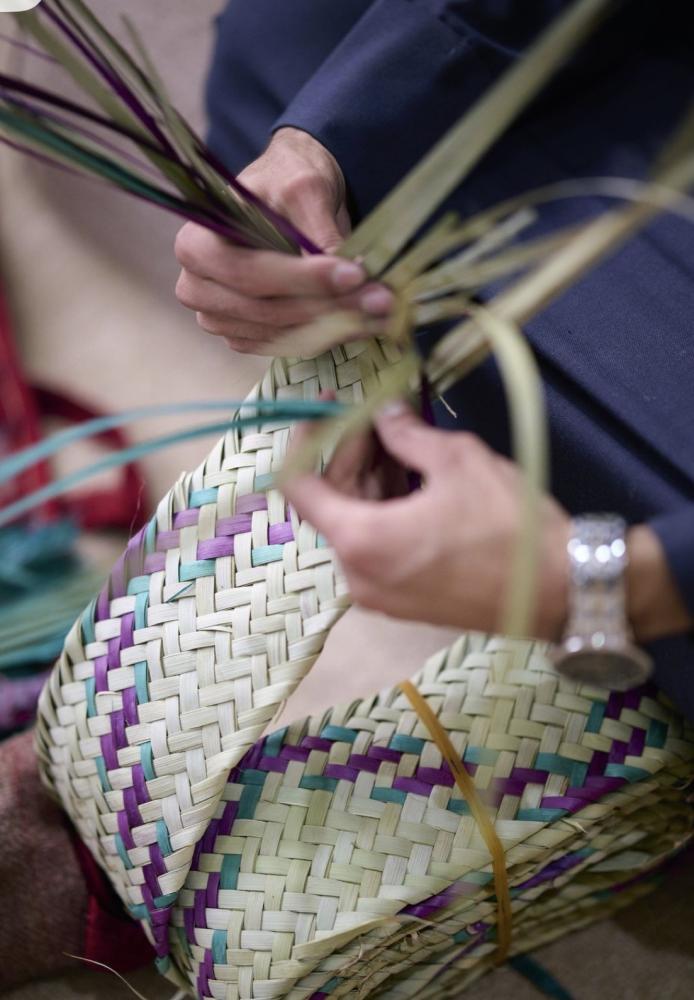
Instead of treating objects as isolated products, the brand approaches design as part of a lived environment—where bags, accessories, and lifestyle pieces become extensions of personal identity and daily ritual.
There is a shared sensitivity across this new wave of Saudi creativity:
an attention to texture
a respect for culture without nostalgia
and a focus on how design integrates into real life
Beyond Fashion: A Cultural Ecosystem
What is emerging is not a single trend, but a creative ecosystem.
Designers, founders, and creative studios are beginning to influence one another indirectly through shared references, materials, and sensibilities.
The result is a more layered and mature design identity for the region—one that feels less like imitation of global aesthetics and more like contribution to them.
In this context, brands like Palm & Pattern are not simply participating in a market.
They are participating in a cultural shift.
The Future of Saudi Creative Identity
As the industry continues to evolve, the most compelling work will likely come from those who are not trying to replicate existing categories, but instead create new ones.
New definitions of luxury.
New interpretations of femininity.
New ways of expressing cultural identity through design.
The strength of this movement lies in its diversity.
Not every brand looks the same.
But many of them feel connected by something quieter:
a shared understanding that design is not just about objects—
but about how life is shaped around them.